How Aquafaba Creates the Perfect Vegan Nougat Texture
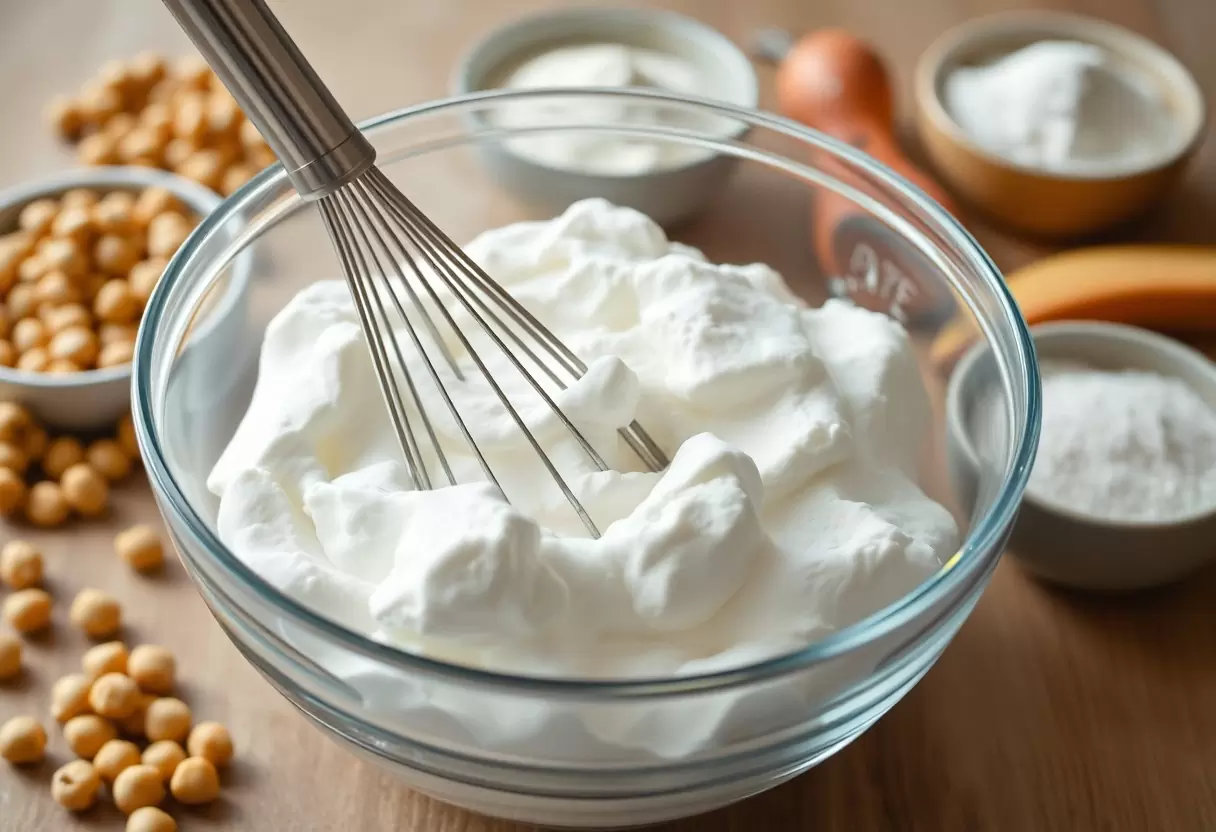
Most often you rely on aquafaba because its proteins and starches mimic egg whites, letting you whip glossy foam that gives nougat an airy, chewy texture; watch

This article contains Amazon affiliate links. As an Amazon Associate, CandiesAndSweets earns from qualifying purchases.
 Save
Save
Most often you rely on aquafaba because its proteins and starches mimic egg whites, letting you whip glossy foam that gives nougat an airy, chewy texture; watch hot sugar burns and seizing, and follow ratios so your nougat sets reliably.
The Chemical Composition of Aquafaba
Composition of aquafaba centers on water-soluble proteins, oligosaccharides and small polysaccharides, with minor fats and minerals that you rely on to recreate nougat texture; these components determine viscosity and film-forming ability, with proteins, oligosaccharides, and saponins doing the heavy lifting.
Chemical makeup varies by legume and cooking, so you concentrate aquafaba to tune functionality; concentrated batches increase air-holding but can carry trace antinutrients or bitterness if over-reduced, which you should manage by testing dilution.
Protein and Starch Synergy
Proteins unfold during whisking and cross-link at air interfaces, creating the protein network that traps bubbles and gives nougat its chew, a structure you strengthen by controlling pH and mechanical shear.
Starch contributes bulk and mouthfeel while binding water, so you use starch-thickening to reinforce the protein matrix; balancing starch concentration prevents collapse without turning the nougat pasty.
The Role of Saponins in Foam Stability
Saponins lower surface tension and rapidly adsorb to bubble surfaces, producing a foam-stabilizing layer that you exploit to maintain fine, long-lived aeration in vegan nougat.
Surface activity of saponins complements proteins: saponins stabilize the interface while proteins form elastic films behind them, so you adjust ratios to maximize longevity and texture without over-stabilizing.
Monitor saponin levels because they can add bitterness and, in concentrated form, exhibit trace hemolytic activity; you mitigate this by diluting, blanching, or selecting milder legume sources to keep flavor and safety optimal.
The Mechanics of Aeration
You rely on aquafaba’s mix of surface-active proteins, soluble fibers, and saponins to trap air and form the matrix that gives nougat its chewy yet tender texture, so controlling shear, temperature, and timing determines final stability and mouthfeel.
Mechanical Agitation and Bubble Formation
Whipping forces air into the liquid and you must produce many small, uniform bubbles by choosing the right speed, whisk shape, and bowl material; large bubbles or excess heat from metal beaters can weaken the foam and create voids in the nougat.
Achieving Optimal Peak Stiffness
Timing tells you when peaks are ready: aim for peaks that hold shape but still fold smoothly into the base, balancing sugar and mixing to reach stiff, glossy peaks without making the nougat brittle or prone to collapse.
Temperature matters because hot syrups can denature proteins while cold additions slow aeration; by cooling aquafaba slightly and adding sugar or syrup in stages you create a foam that is stable yet pliable for shaping and setting.
Thermal Stability and Sugar Syrups
Heat drives partial coagulation of aquafaba proteins and tightens the foam network, so you must watch temperature to prevent overheating that leads to collapse or graininess. Properly managed warmth allows the syrup to integrate and form the chewy, aerated texture you expect from nougat.
Temperature swings in cooked syrups change sugar concentration and viscosity, so you should match syrup stage to aquafaba resilience; too-hot syrup increases the chance of sugar crystallization and foam breakage, while slightly cooled syrup encourages a glossy, stable emulsion.
Interaction with High-Temperature Cooked Sugars
When you introduce hot syrup to aquafaba, rapid heat transfer can denature proteins and burst air cells, so add syrup slowly while whisking to temper proteins and reduce foam collapse.
Key Interactions
| Syrup Stage | Effect on Aquafaba |
|---|---|
| Thin, low-viscosity syrup | Penetrates foam quickly; increases risk of collapse and weeping |
| Thicker, high-concentration syrup | Builds structure if tempered properly; can lock in air and sugar crystals |
Maintaining Structural Integrity During Incorporation
Gentle folding and steady whisking let you combine syrup without rupturing air cells; maintain medium speed and watch for signs of separation so the protein-sugar network sets into a chewy nougat texture. You might also enjoy our guide on How to Make Plant-Based Truffles at Home Easily.
Control the syrup addition by pouring in a thin stream and pausing if you notice weeping or breakdown, then resume at slower speed to rebuild and preserve the desired aeration and chew.
Engineering the Signature Nougat Chew
Aquafaba constructs a flexible protein-polysaccharide scaffold when you whip and heat it with sugar, so precise temperature control and syrup concentration determine how elastic the final chew will be.
Textural nuance comes from how you balance aeration and syrup viscosity to trap tiny bubbles without collapse, and you must guard against overwhipping or overcooking that can ruin the matrix.
Controlling Moisture Content for Elasticity
Balance of water and sugar in the mix dictates elasticity, so you slightly reduce free water to increase chew while avoiding dryness that makes nougat brittle.
The Impact of Fat Emulsification on Mouthfeel
Fat coats the aerated network to create silkiness, and you achieve even mouthfeel by dispersing oils slowly or using emulsifiers to produce uniform droplet size for a buttery impression.
Emulsification technique matters because you can pre-emulsify oils into aquafaba or add lecithin to stabilize droplets, which prevents separation and keeps chew consistent over shelf life while avoiding excess oil that makes the bar greasy (negative effect).
Structural Comparison: Aquafaba vs. Egg Albumen
| Parameter | Aquafaba vs. Egg Albumen |
|---|---|
| Protein composition | Aquafaba: diluted plant proteins and polysaccharides; Egg: concentrated albumen proteins. |
| Foam formation | Aquafaba: slower to aerate but forms stable foam with sugars; Egg: rapid, dense foam. |
| Elasticity vs. brittleness | Aquafaba: more elastic, less brittle; Egg: firmer, cleaner break. |
| Water binding | Aquafaba: higher free water retained; Egg: tighter protein gel reduces free water. |
| Sensitivity | Aquafaba: sensitive to fat and syrup viscosity; Egg: sensitive to overwhipping and heat. |
| Thermal behavior | Aquafaba: sets with sugar/stabilizers; Egg: coagulates into a firmer network on heating. |
Tensile Strength and Density Analysis
Aquafaba gives you a foam with lower tensile strength than egg albumen, producing a slightly more elastic, less brittle nougat matrix; you can raise firmness by increasing total solids, adding invert sugar or powdered stabilizers, and controlling whipping to preserve air cell uniformity. Overwhipping can collapse structure and make the nougat grainy.
Egg albumen provides you with higher tensile strength and density, yielding a firmer chew and cleaner cut in traditional nougat; you should match mouthfeel with aquafaba by adjusting sugar concentration or using hydrocolloids to achieve similar egg-like firmness without losing aeration.
Flavor Neutrality and Ingredient Interaction
You benefit from aquafaba’s near-neutral flavor, which lets chocolate, nuts, and syrups dominate the nougat profile while minimizing eggy notes that can appear with albumen when heated; you can therefore experiment with bolder inclusions without masking base flavors.
Interactions between aquafaba and ingredients differ, so you may find fats and syrup viscosity alter foam stability more than with egg whites; you should balance fat percentage and syrup temperature to avoid foam collapse and consider small amounts of acid or stabilizer to improve protein unfolding and set. You might also enjoy our guide on Why Vegan Candy Ingredients Taste Better Than Ever Before.
Testing shows you can add 1/8-1/4 tsp cream of tartar per cup of aquafaba or a touch of lemon juice to strengthen the foam, and moderate glucose:sucrose ratios to control crystallization; you may also use vegetable glycerin or pectin for chew and shelf-life while monitoring for moisture-driven stickiness in the finished nougat.
To wrap up
So you rely on aquafaba’s foamable proteins and soluble fibers to mimic egg whites, letting you whip stable, glossy peaks that incorporate air. You get a chewy yet tender nougat because the whipped matrix traps sugar and oil while absorbing heat, then sets into a flexible bite; small amounts of vinegar or cream of tartar stabilize the foam and control crystallization for consistent texture. You might also enjoy our guide on Best Vegan Chocolate Brands for Plant-Based Sweet Lovers.