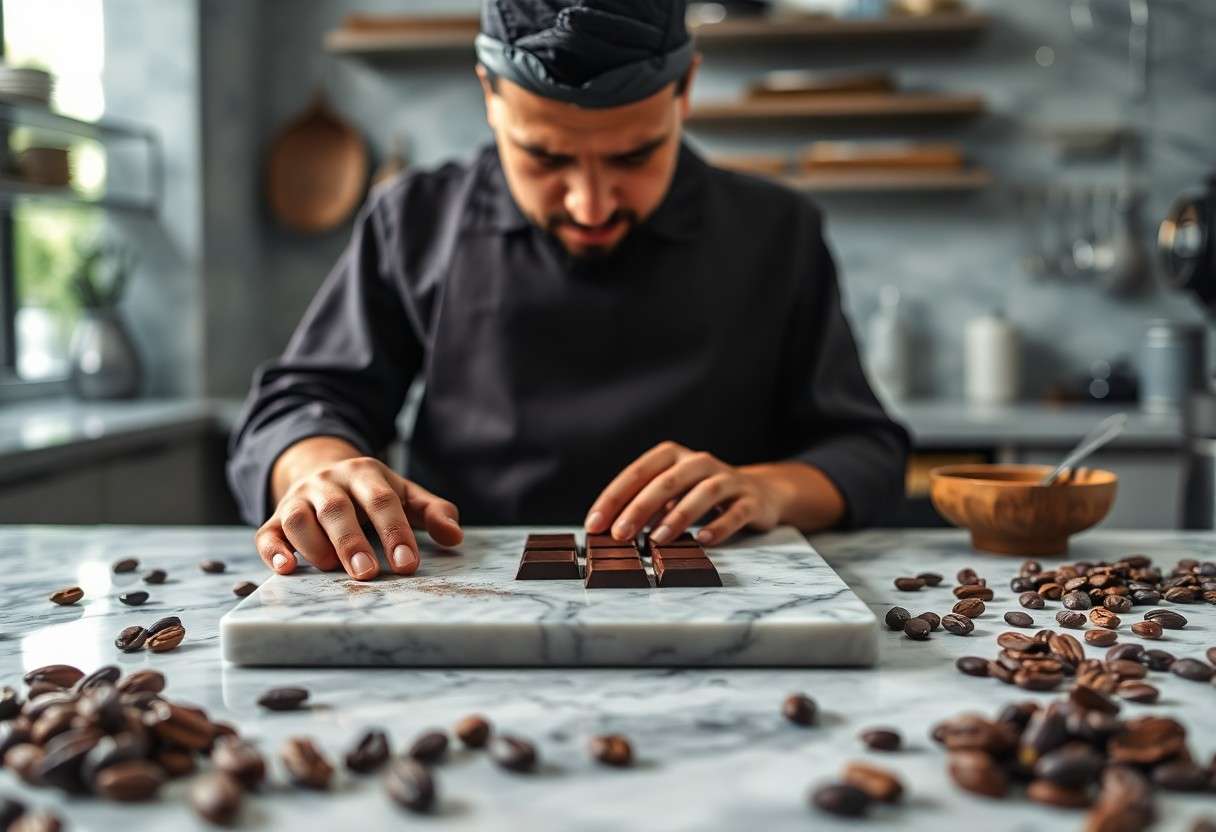
Artisanal Small Batch Chocolate Makers Guide
There's a world where you coax flavor from beans, prize single-origin cacao, avoid scalding tempering burns, and revel in small-batch shine. Picking Your Poison

This article contains Amazon affiliate links. As an Amazon Associate, CandiesAndSweets earns from qualifying purchases.
 Save
Save
Part of our Single-Origin & Artisanal Chocolate guide.
There’s a world where you coax flavor from beans, prize single-origin cacao, avoid scalding tempering burns, and revel in small-batch shine.
Picking Your Poison: Cacao Varieties (Types)
Pick your cacao like you pick a partner: flashy or dependable; Forastero brings quantity, Criollo brings finesse, Trinitario flirts between.
- Forastero
- Criollo
- Trinitario
- Nacional
| Forastero | High yield, hearty, simpler flavor |
| Criollo | Rare, floral, fragile and prized |
| Trinitario | Hybrid balance of flavor and vigor |
| Nacional | Amazonian, aromatic, terroir-driven |
| Amelonado | Forastero variant with nutty notes |
Compare tasting notes and yields to match your goals. This narrows your bean shortlist fast.
The Hardy Workhorse: Forastero
Sturdy Forastero gives you reliable yields and disease-resistant plants, so you get volume without fuss. You’ll sacrifice some complexity, but your customers get consistent, chocolatey base notes.
The High-Maintenance Diva: Criollo
Rare Criollo is the diva: delicate trees, low yield, and floral, nuanced flavors that command prices. You’ll need obsessive care, but the payoff is exceptional aroma.
Delicate genetics make it sensitive to disease and environment, so expect small harvests and big premiums.
The Six-Step Shuffle to Perfection (Step-by-step)
| The Six-Step Shuffle | |
|---|---|
| Step 1 | Sort & inspect beans |
| Step 2 | Roast to taste |
| Step 3 | Crack and separate shells |
| Step 4 | Winnow husks from nibs |
| Step 5 | Grind and conch to smoothness |
| Step 6 | Temper, mold, and cool |
Roasting Without Setting the Kitchen on Fire
You control roast by starting modestly-small batches, steady agitation, and a thermometer within reach make the difference. Keep an eye on color and aroma; light smoke signals flavor development while thick smoke signals burn risk. If beans scorch, discard that batch and lower heat before trying again to protect both taste and your oven.
The Zen Art of Winnowing and Grinding
Once beans are cool, crack them and separate shells from nibs with a sieve, fan, or careful tapping; aim to remove light husks while keeping nibs intact. Use a mask if dust rises to avoid inhalation, and keep surfaces tidy so you don’t reintroduce debris.
Patience pays during grinding: progress from coarse to paste while maintaining a controlled temperature so cocoa butter behaves and you achieve silky smoothness. Taste frequently and extend conching until bitterness softens and texture coats a spoon without grit.
Why Your Chocolate is Having a Meltdown (Factors)
Heat toys with your bars: when ambient temperature climbs, cocoa butter softens, molds slump and finishes lose their snap, and you flirt with fat bloom or sticky surfaces when storage drifts. You also invite sugar bloom if condensation forms on the shell.
- Humidity – encourages sugar bloom
- Tempering – creates stable beta crystals
- Storage temperature – keeps snap and gloss
- Fat bloom – indicates melted/recrystallized fat
- Sugar bloom – shows moisture damage
The fixes are strict temperature control, low humidity and reliable tempering.
Humidity: The Silent Texture Killer
Moisture wrecks your gloss: at modest relative humidity chocolate will absorb water, dissolve surface sugar and recrystallize into gritty, white sugar bloom, leaving bars sticky and unappealing. You should store finished products below 50% RH and avoid fridge condensation.
The Temperamental Science of Tempering
Chocolate demands disciplined heat cycles: when you skip exact temps unstable cocoa butter polymorphs form, producing dull finish or fat bloom, so you must guide crystal formation to the shiny beta stage.
Practice with a good digital thermometer, try the seed method, and work in small batches-melt, cool, then gently rewarm to the target temper to avoid overheating and ruined texture.
The Bitter Truth and Sweet Success (Pros and Cons)
You juggle bean selection, micro-roasts and boutique branding while chasing higher margins and rapt customers; small runs reward quality but punish inefficiency. Hard truth: tempering tantrums and variable yields turn beautiful recipes into inventory headaches unless you obsess over process.
Flavor sells the story, yet specialty beans, storage and compliance inflate costs, so your wins come with tighter cash flow and regulatory headaches. Playful packaging and direct sales can offset this if you keep quality consistent.
| Pros | Cons |
|---|---|
| Artisan control | Labor intensive |
| Premium pricing | Higher per-unit costs |
| Story-driven branding | Inconsistent batches |
| Small inventory risk | Food safety risk |
| Creative freedom | Equipment maintenance |
| Direct customer feedback | Regulatory compliance |
| Traceability | Inventory spoilage |
| Giftable products | Limited scale |
The Glory of Hand-Wrapped Bars
Hand-wrapping turns packaging into performance; you sell ritual as much as chocolate and build a tactile bond with buyers. Bold presentation and bespoke labels let you command attention and a premium.
People notice imperfections in a good way-those tiny folds read as authenticity, which fuels word-of-mouth and repeat orders for your micro-batch lines. You might also enjoy our guide on Valentine’s Day Celebrations: Top 10 Global Activities & Real-Life Romantic Experiences.
The Reality of Chocolate-Covered Floors
Floors attract melted temper and dropped bars; you’ll face sticky footprints, cross-contamination risks and annoyed visitors if you ignore layout and workflow. Slip hazards make food safety and insurance priorities.
Slip risks translate into real costs: mats, signage, training and faster cleaning schedules all chip away at artisanal margins unless you plan for them. You might also enjoy our guide on How to Make Homemade Lollipops: Artisanal Hard Candy.
Cleanup routines-dedicated tools, scheduled mopping and clear drains-protect product quality; skimp on those and you risk ruined batches, lost customers and a nasty health inspection. You might also enjoy our guide on Why Artisanal Chocolate Craftsmanship Matters Today.
Conclusion
You walked through bean-to-bar basics, tuned your palate, and can now coax single-origin quirks from tiny kettles without turning the kitchen into a science fair. Your craft will delight friends and vex chocoholics who thought factory bars were peak. Keep experimenting, savor mistakes, and let each small batch prove you make chocolate with personality, not production lines.