Best Vegan Chocolate Brands for Plant Based Sweet Lovers
Vegan chocolate choices vary; you must check labels for milk traces and cross-contamination risks, and choose brands with clear plant-based certification and hi

This article contains Amazon affiliate links. As an Amazon Associate, CandiesAndSweets earns from qualifying purchases.
 Save
Save
Part of our Vegan & Plant-Based Chocolate & Candy guide.
Vegan chocolate choices vary; you must check labels for milk traces and cross-contamination risks, and choose brands with clear plant-based certification and high-quality cocoa to ensure flavor and safety.
Defining the Standards of Premium Vegan Chocolate
Standards for premium vegan chocolate center on bean origin, roast profile and a high cacao percentage, so you should prefer bars labeled 70%+ cacao and made from single-origin beans.
Quality also includes transparent processing and ethical sourcing, so you can expect clear labeling on fair trade or direct-trade practices and minimal use of refined sugars.
Essential Plant-Based Ingredients and Emulsifiers
Ingredients matter: you should look for cocoa mass, cocoa butter and natural sweeteners like coconut sugar or maple syrup while avoiding artificial additives.
Emulsifiers such as sunflower lecithin are preferable to soy lecithin for allergy-sensitive buyers, and you should check labels for non-GMO sourcing.
Decoding Labels: Dairy-Free Certifications and Cross-Contamination
Labels can be misleading, so you must prioritize products with a clear certified vegan or dairy-free logo and avoid bars that state “may contain milk” if you have a dairy allergy.
Read manufacturing statements for terms like shared equipment or manufactured in a facility, because cross-contact with milk proteins poses an immediate risk to anyone with severe dairy allergy.
Verify certification dates and certifier names so you can confirm ongoing compliance and avoid products without up-to-date dairy-free verification.
Top-Rated Artisanal and Craft Vegan Chocolatiers
Discover makers who focus on single-origin beans and direct trade, so you can taste specific terroir in each bar. You’ll appreciate the clarity and texture from small-batch production, and you should watch labels for processing notes since some artisans operate on shared lines and products may contain traces of nuts.
Expect intense, well-defined cocoa with bars often offering high cocoa percentage options above 70%; you’ll find less sugar and more nuanced bitterness. You should check packaging for hidden dairy or flavoring agents, because some flavored confections still use milk derivatives.
Excellence in Bean-to-Bar Production
Seek bean-to-bar houses that control fermentation, roasting and conching so you can trace flavor back to the farm. You’ll value their traceability and commitment to ethical sourcing, which often results in cleaner, more transparent tasting notes.
Compare production notes and you’ll notice handcrafted roasts emphasize acidity or chocolate fruitiness depending on origin. You should expect clear labeling stating whether bars are dairy-free and whether equipment shares exposure to allergens.
Gourmet Flavor Profiles and Small-Batch Innovation
Taste adventurous combinations where botanical infusions, smoked salts and citrus peel partner with cacao; you’ll enjoy inventive but balanced varieties. You should seek out limited runs and seasonal pairings to sample a chocolatier’s most creative work.
Savor small-batch innovation that experiments with fermentation profiles, bean blends and local ingredients to produce one-off expressions. You must note that some experimental bars sell out quickly and may carry allergen warnings, so buy early if you want rare flavors.
Explore tasting sets and subscription boxes to sample micro-batches; you’ll better understand how acidity, floral notes and bean bitterness interplay. You should prioritize makers who highlight limited releases, because those bars often provide the most distinctive and collectible profiles.
Best Commercial Vegan Brands for Accessibility
Chains and big-box retailers stock an increasing range of vegan chocolate so you can pick options locally or online; look for clear labeling to save time when shopping. Wide availability helps you satisfy cravings without specialty-store runs.
Labels on packaging will guide your choice, but you should read ingredient lists and allergy statements closely to avoid surprises. Watch for cross-contact with dairy warnings if you have strict vegan or allergic requirements.
Reliable Supermarket Favorites with Vegan Lines
Brands such as Trader Joe’s, Whole Foods 365, and many supermarket private labels offer vegan-friendly dark and specialty bars that make everyday purchases simple for you. Expect consistent quality and affordable options on regular shelves.
Shopping the familiar aisles lets you compare texture and sweetness without spending much; still, you must check for ‘may contain’ or processing-facility notes because milk traces can appear on some products.
High-Quality Dark Chocolate Options for Everyday Cravings
Artisan and bean-to-bar producers provide complex, nuanced bars that you’ll enjoy daily; choose bars labeled 70%+ or those claiming single-origin for richer flavor depth. You’ll notice clearer cocoa notes and less added sugar.
Many premium dark bars follow strict vegan processes, but you should confirm there are no added dairy derivatives or milk-based emulsifiers; remember that higher-cocoa bars can contain more caffeine and theobromine, affecting sensitive individuals.
Consider sampling small bars or minis so you can assess bitterness, mouthfeel, and intensity before buying larger quantities, and look for Fair Trade or organic seals if ethical sourcing matters to you.
The Evolution of Creamy Milk-Style Vegan Alternatives
Brands have refined recipes so you can enjoy creamier textures and more authentic milk-chocolate flavor without dairy, making plant-based bars feel indulgent rather than a compromise.
Development in ingredient science lets you choose products that balance cocoa, fats, and sweeteners; still, you should check allergen labels and watch for excessive added sugar when comparing options.
Oat, Almond, and Coconut Milk Varieties
Oat milk brings a naturally creamy sweetness that lifts chocolate, and you can often find bars using oat that deliver a smooth, milky melt while remaining low in nut allergens.
Almond and coconut variants each change the profile: almond gives a light, nutty note but carries an allergen risk, while coconut adds richness thanks to higher saturated fat, which helps replicate traditional mouthfeel.
Achieving Traditional Texture Without Dairy Proteins
Texture makers rely on cocoa butter, plant fats, and emulsifiers so you can experience the familiar snap and creaminess; you should expect ingredient lists that mimic dairy sensations without using milk proteins.
Hydrocolloids and plant proteins like pea protein, plus emulsifiers such as sunflower lecithin, are common-so you should check labels if you avoid specific additives or want cleaner formulations.
Functional and Health-Conscious Vegan Chocolate
You can prioritize bars that pair high-percentage cacao with adaptogens, MCTs, or probiotics to support mood and digestion; expect antioxidant-rich cacao and nutrient-dense inclusions, but scan labels to avoid hidden sugars and artificial emulsifiers that undercut benefits.
Choose brands with clear ingredient lists, certified organic sourcing, and explicit cacao percentages-aim for 70%+ cacao for more flavonoids, and compare serving sizes so you trust the health claims.
Raw Cacao and Antioxidant-Rich Superfood Infusions
Raw cacao bars use lower heat to preserve flavonoids, so you often get a more concentrated antioxidant profile; select products that list processing methods and certifications for authenticity and higher flavonoid content.
Dark blends infused with matcha, maqui, or turmeric add micronutrients and flavor complexity, but verify that the superfood additions are present in meaningful amounts rather than just trace flavoring.
Low-Glycemic and Sugar-Free Plant-Based Selections
Look for plant-based bars sweetened with monk fruit, allulose, or small amounts of stevia to keep blood-sugar impact low; monk fruit and allulose provide sweetness with minimal glycemic effect, while maltitol and some sugar alcohols can cause digestive upset.
Watch net carbs, fiber, and serving size since “sugar-free” can still contribute calories and an insulin response; review nutrition panels so you know the net carbs per serving.
Consider trialing small portions to gauge tolerance and favor brands that publish full sweetener sources and clinical notes-prioritize transparent labeling over marketing buzz.
Sustainability and Ethical Sourcing Standards
Brands that prioritize transparent sourcing protect ecosystems and producers; you can prefer those showing reduced deforestation and clear supplier traceability.
You should favor companies that publish traceability reports and audits, since child labor risks and unfair wages still affect parts of the cacao supply chain.
Importance of Fair Trade and Rainforest Alliance Labels
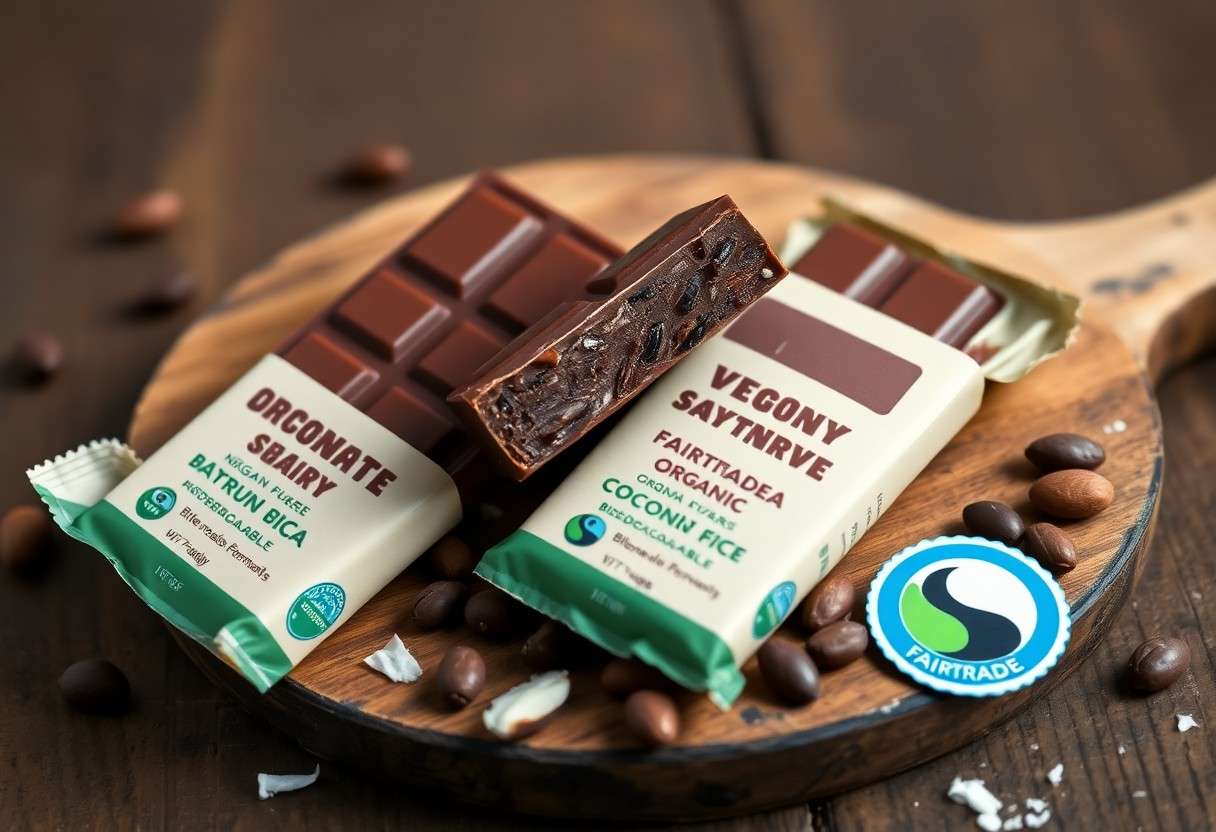
Fair Trade and Rainforest Alliance labels mean you can expect standards for wages, community premiums, and environmental practices, helping support ethical production.
Checking label verification numbers or producer stories helps you confirm authenticity and avoid greenwashing, because some claims lack independent oversight.
The Environmental Impact of Plant-Based Confectionery
Plant-based chocolate often lowers greenhouse gas emissions compared with dairy versions, but you should watch ingredient sourcing that can drive deforestation and biodiversity loss.
Examining packaging, water use, and transport lets you judge a brand’s full footprint, and choosing companies that use regenerative agriculture and recyclable packaging reduces overall harm.
Conclusion
From above, you can see top vegan chocolate brands blend ethical sourcing, rich cocoa, and inventive plant-based ingredients to satisfy sweet cravings without dairy. You should prioritize clear ingredient lists, fair-trade sourcing, and flavor profiles that match your taste. You will find artisanal and mainstream options that deliver quality, so choose based on cocoa percentage and texture to enjoy decadent, animal-free chocolate.