Master Chocolatier Techniques Distinguish Artisanal Products from Industrial Alternatives
Over the years, master chocolatiers have refined techniques that elevate chocolates beyond mere sweets to exceptional works of craftsmanship. By understanding t

This article contains Amazon affiliate links. As an Amazon Associate, CandiesAndSweets earns from qualifying purchases.
 Save
Save
Over the years, master chocolatiers have refined techniques that elevate chocolates beyond mere sweets to exceptional works of craftsmanship. By understanding the methods and artistry behind artisanal products, you can appreciate how these approaches contrast with mass-produced alternatives. This post will explore key techniques employed by chocolatiers that not only enhance flavor and texture but also reflect a commitment to quality and individuality that industrial chocolate often lacks.
The Art of Chocolate Making
Sourcing Quality Ingredients
Your journey in chocolate making begins with sourcing high-quality ingredients. Selecting premium cocoa beans from specific regions, such as Venezuela or Ecuador, significantly impacts the flavor profile of your final product. These beans should ideally be single-origin, allowing you to highlight the unique terpenes and flavors that different soils and climates cultivate. Establishing relationships with local farmers or specialized suppliers can further enhance the traceability and quality assurance of your chocolate.
Additionally, consider the importance of other ingredients like sugar, milk, and flavorings. Organic cane sugar, for example, not only offers a cleaner taste but also supports sustainable farming practices. Incorporating artisanal dairy, sourced from local farms, can elevate your chocolate’s creaminess and flavor complexity, making each bite a testament to your commitment to craftsmanship.
The Chocolate Crafting Process
The chocolate crafting process is where science meets artistry. It begins with roasting the cocoa beans, a vital step that unlocks their rich, complex flavors. Optimal roasting times and temperatures vary based on the bean variety, requiring your expertise to achieve the best results. Following roasting, winnowing removes the shell from the nibs, paving the way for grinding the nibs into a smooth chocolate liquor. Your choices during this phase, such as the temperature and grinding duration, directly influence the texture and mouthfeel of the finished chocolate.
Techniques of Master Chocolatiers
Tempering for Optimal Texture
Tempering chocolate involves heating and cooling it to stabilize the cocoa butter crystals, which is important for achieving a smooth, glossy finish and ensuring a satisfying snap. You begin the process by melting chocolate to a specific temperature—typically around 45-50°C (113-122°F)—to break down the existing cocoa butter crystals. Once melted, you cool it down while stirring to allow new, stable crystals to form, usually aiming for 27-28°C (80-82°F) before gently reheating it to final working temperature of about 31-32°C (88-90°F) for dark chocolate, slightly lower for milk and white chocolates. Master chocolatiers expertly manipulate temperatures, yielding a mouthfeel that’s both luxurious and delightful.
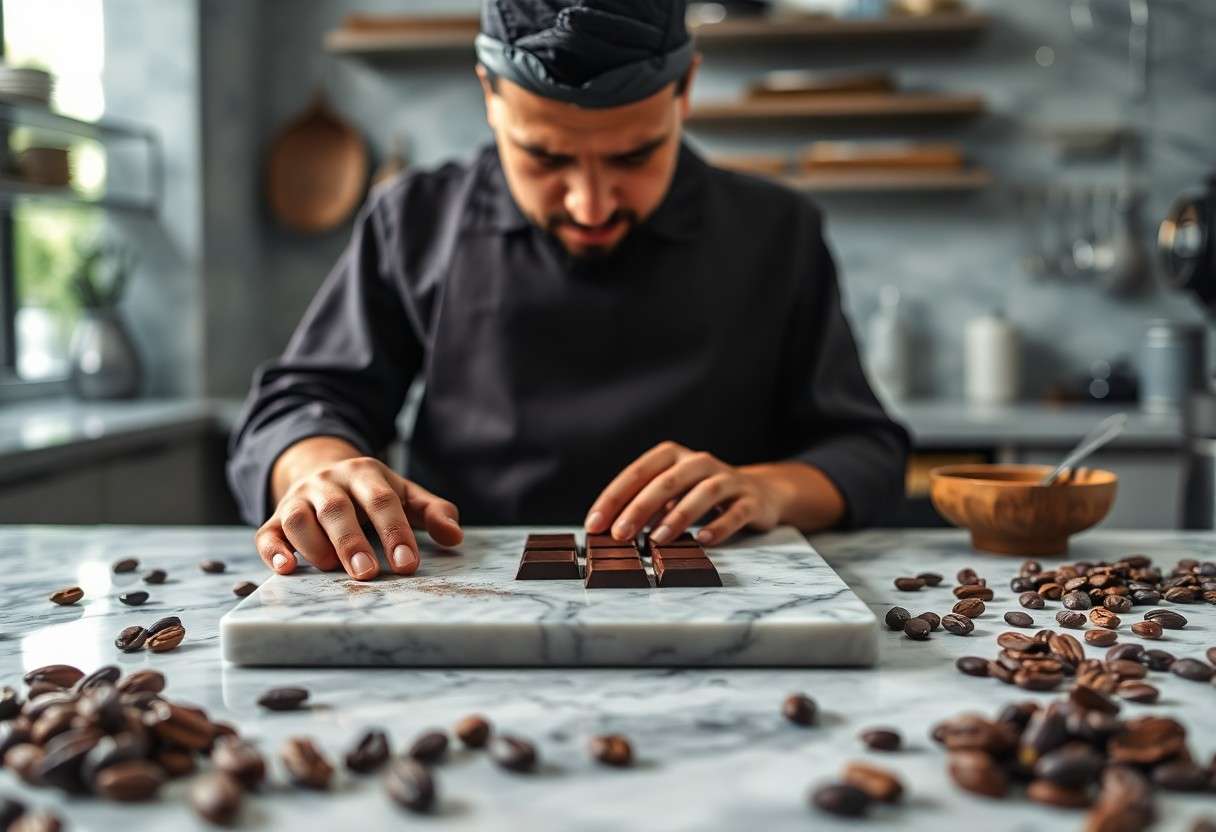
The choice of equipment, such as a marble slab or a controlled tempering machine, can significantly impact the outcome. Each method provides distinct advantages, such as precise temperature control or ease of use, enabling you to select the best approach based on your production scale and expertise. Successful tempering results not only in a beautiful sheen but also enhances the chocolate’s texture, allowing it to melt effortlessly in your mouth and presenting a sensation that can only be achieved through artisanal techniques.
Flavor Layering and Pairing
Master chocolatiers excel in flavor layering, where complex and often contrasting flavors are built into a single chocolate experience. Combining ingredients like spices, herbs, fruits, or even unexpected elements like sea salt or coffee creates depth, elevating your chocolate beyond simple sweetness. Think of how chili might add warmth to a dark chocolate base, or how a hint of citrus can brighten and complement the richness of milk chocolate. Each ingredient must harmonize, ensuring that the chocolate’s natural flavor remains prominent while enhancing the overall experience.
Balancing flavors requires a delicate touch and a deep understanding of taste profiles. Aged balsamic vinegar can infuse a dark chocolate ganache with acidity, while the earthiness of matcha might provide a contrast to the sweetness of white chocolate. Master chocolatiers often conduct tasting sessions, refining recipes until the perfect combination is achieved. By meticulously layering and pairing flavors, you can create a dynamic tasting journey that surprises and delights the palate.
Incorporating a variety of regions, sources, and processes opens a world of creative possibilities. Using single-origin chocolates allows you to showcase distinct flavor notes intrinsic to specific growing regions. For example, chocolates from Madagascar are often characterized by fruity notes, while those from Venezuela might present nutty undertones. Your ability to not only combine but also to layer these flavors effectively is what sets apart artisanal products from mass-produced alternatives.
The Role of Creativity in Artisanal Chocolate
Unique Flavor Combinations
Your exploration of unique flavor combinations can elevate artisanal chocolate to new sensory heights. Master chocolatiers often experiment with unexpected ingredients, such as sea salt paired with dark chocolate or chili in milk chocolate, creating delightful contrasts that surprise the palate. For example, a combination of raspberry and rosemary introduces a sweet and herbal dynamic, enhancing the overall chocolate experience while showcasing the artisan’s creativity.
Aesthetic Presentation
Artisanal chocolate isn’t just about taste; its visual appeal plays a significant role in the overall experience. The artistic presentation of each piece can communicate the chocolatier’s skill and creativity. Techniques such as hand-painting, intricate molds, and layering different types of chocolate result in stunning visual effects that captivate the eye. A well-crafted assortment might feature vibrant colors or delicate designs that mirror the flavor profile, creating anticipation before the first bite.
Consider how the arrangement of chocolates can influence your perceptions. A carefully curated display, perhaps on a marble slab or within elegant packaging, enhances the product’s allure and suggests an elevated experience. Brands often use unique shapes or embellishments, such as edible gold leaf or artistic piping, to reinforce their artisanal identity and justify a premium price point.
Attention to aesthetic presentation not only reflects the chocolatier’s craftsmanship but also creates a memorable experience that lingers long after the chocolate is gone. Each detail contributes to the emotional connection with the consumer, turning ordinary chocolate consumption into a celebration of artistry and innovation.
Industrial Alternatives: A Comparison
| Artisanal Products | Industrial Alternatives |
|---|---|
| Handcrafted in small batches | Mass-produced in factories |
| High-quality, single-origin ingredients | Lower-grade, bulk ingredients |
| Unique flavor profiles | Standardized flavors |
| Shorter shelf life, natural ingredients | Longer shelf life with additives |
Mass Production Methods
Mass production methods prioritize efficiency and scale over craftsmanship. You’ll find that large-scale chocolate manufacturers use continuous flow systems for mixing and conching, allowing for rapid output but sacrificing nuanced flavor development. These processes often involve high heat, which can degrade the delicate flavor notes inherent in premium cacao. Consequently, your industrial chocolate bars may lack the depth and complexity of their artisanal counterparts, resulting in a uniform taste that lacks character.
In contrast, artisanal chocolatiers employ traditional methods that embrace time and care. You may notice the influence of techniques like stone grinding and slower conching times, which enhance flavor extraction and promote desirable textures. The passion and expertise in these small batches create products that resonate with chocolate enthusiasts seeking a distinct culinary experience.
Preservatives and Additives
Many industrial chocolate products contain preservatives and artificial additives to extend shelf life and maintain consistency. These chemicals can mask subpar ingredients and detract from the authentic taste of chocolate. When you examine the ingredient lists on commercial chocolate bars, you might encounter emulsifiers like soy lecithin, which ensure smooth consistency but can also diminish the quality of your chocolate experience. In many cases, the inclusion of artificial flavors can lead to an overwhelming sweetness that overshadows the true essence of the cacao.
On the other hand, artisanal chocolates typically eschew artificial ingredients in favor of natural options. You’ll find that these creators often focus on using pure cacao, organic sweeteners, and minimal, recognizable additives. This commitment to quality ingredients not only enriches the flavor but also aligns with the desire for a more authentic treat that celebrates the origin of its components.
Taking note of how preservatives and additives play a role in chocolate production helps you appreciate the importance of ingredient integrity. By choosing artisanal options, you’re selecting high-quality products that exemplify craftsmanship and respect for the raw materials. This dedication to purity not only elevates your chocolate tastes but also reflects a larger commitment to sustainable and ethical production practices.
The Importance of Terroir in Chocolate
Effects of Geography on Flavor
Your understanding of chocolate’s flavor can greatly enhance when you consider the geography where the cacao is grown. Just as wine derived from different regions exudes unique qualities due to its environment, so does chocolate. For instance, post-harvest processing methods combined with the local climate—such as humidity, rainfall, and sunlight—affect the beans’ final taste profile. Cacao grown in the dry, high-altitude regions of Ecuador often has fruity, bright flavors, while beans from the lush, tropical climate of the Ivory Coast may yield more earthy, nutty notes. The specific microclimates and soil composition also contribute to these distinctions, creating a rich canvas for flavor development.
You may find that beans sourced from Madagascar present notes of tart red berries due to the unique fermentation process they undergo, while beans from Venezuela could showcase deep, cocoa-based flavors interwoven with hints of spice. Such variances underscore the essence of terroir in chocolate production, reminding you that where the cacao grows directly influences what you ultimately taste in each bite.
Ethical Sourcing and Sustainability
Sourcing cacao ethically involves much more than selecting high-quality beans; it extends to ensuring fair labor practices and promoting sustainable farming techniques. You’ll discover that artisanal chocolatiers often prioritize relationships with farmers, ensuring they receive a fair price while supporting community initiatives. For those growers, adhering to sustainable practices means replanting native trees, practicing organic farming, and preserving biodiversity. This direct relationship fosters a sense of ownership among farmers, enhancing the quality of the beans produced.
Understanding the impact of your chocolate choices can deepen your appreciation of the craft. You might choose brands that contribute a portion of profits back to the growing communities or aid in education and healthcare initiatives. This holistic approach enriches not only your experience as a chocolate consumer but also empowers the communities that cultivate the cacao.
With the rise of consumer awareness surrounding ethical sourcing, many chocolatiers are now transparent about their supply chains. This shift allows you to trace the origins of your chocolate, reinforcing your connection to the growers and the land. When you choose chocolate that adheres to these sustainable practices, you actively participate in a movement that values quality, community, and the environment, making every bite not just a treat but a transformative experience.
Consumer Awareness and Preferences
Recognizing Quality in Chocolate
Your ability to recognize quality in chocolate significantly impacts your choice between artisanal and industrial products. Look for key indicators such as ingredient lists; high-quality chocolate typically features fewer ingredients, mainly cocoa, sugar, and sometimes a fat such as cocoa butter. In addition, pay attention to the cocoa percentage: a higher percentage indicates a more intense flavor profile and less sugar. Aroma also plays an necessary role; genuine artisanal chocolate often boasts complex, rich scents that commercial alternatives lack.
Trends in Artisanal vs. Industrial Chocolate
Summing up
With these considerations, it becomes clear that mastery of chocolatier techniques is what sets artisanal products apart from their industrial counterparts. You will appreciate the depth of flavor and texture that comes from skillful methods such as bean-to-bar processing, meticulous tempering, and innovative flavor pairings. The careful attention to detail in small-batch production fosters a connection between the chocolatier and the consumer, elevating the chocolate experience beyond mere consumption.
Moreover, by exploring resources like Chocolatiers’ Secrets: Advanced Techniques Revealed, you can gain insights into these exceptional techniques and appreciate the artistry involved in creating high-quality chocolate. This knowledge empowers you to choose products that reflect not only superior taste but also a dedication to craftsmanship and sustainability, enhancing your overall chocolate enjoyment.