How to Make Plant-Based Truffles at Home Easily
Most home cooks think truffles are fussy; you'll prove them wrong by melting vegan chocolate gently (beware: hot ganache can burn), stirring in coconut cream, c

This article contains Amazon affiliate links. As an Amazon Associate, CandiesAndSweets earns from qualifying purchases.
 Save
Save
Most home cooks think truffles are fussy; you’ll prove them wrong by melting vegan chocolate gently (beware: hot ganache can burn), stirring in coconut cream, chilling, rolling, and dusting for decadent dairy-free bliss.
The Vegan Vibe Check: Essential Factors
Check your pantry for stable bases like coconut oil, quality cocoa and nut butters that determine texture in plant-based truffles.
- Texture: creamy vs grainy
- Melting point: fridge-friendly or room-temp
- Allergens: nuts, soy, seeds
- Flavor: bitter, sweet, or salty
Taste as you go, adjust sweetness, salt and aromatics to suit who you’re serving. Perceiving how fats behave at room temperature saves you from greasy flops.
Picking your plant-based partners
Choose ingredients that patch together: velvety nut butter, firm cacao solids or silky coconut cream will change mouthfeel, so pick based on how you want your truffles to feel.
Why fat content makes or breaks the bite
Fat controls snap and melt; too much liquid oil gives greasy drips, while too much hard fat makes chalky bites that you won’t want to serve.
Solid fats like cacao butter lend a polished shell and clean melt, while soft fats make centers luscious but unstable if unchilled.
Balance ratios-try a 60/40 chocolate-to-fat start-and chill briefly to test firmness so your plant-based truffles stay silky, not soggy.
Rolling in the Deep: The How-To Guide
Hands-on, you’ll find that quick, confident movements turn chilled ganache into silky truffles with minimal fuss; keep a small scoop and a tray lined with parchment within reach to speed the process.
Once the ganache firms, you’ll roll with light pressure and steady palms to avoid sticky, misshapen results, then finish by chilling briefly so coatings adhere cleanly.
Melting chocolate without the meltdown
Keep the heat gentle by using a double boiler or brief microwave bursts; never let water contact the chocolate to prevent seizing and potential steam burns.
Use a thermometer and aim for 45-50°C for melting dark chocolate, then cool to about 31-32°C if you temper; stop heating at any sign of graininess.
Mastering the art of the perfect sphere
Press lightly between palms and roll in one smooth motion so each truffle becomes uniformly round, dusting your hands with cocoa to reduce sticking for a professional look. You might also enjoy our guide on Why Rice Milk Chocolate Bars Outsell Other Vegan Options.
Chill the formed spheres briefly to set their shape before coating; this prevents melting under your palms and helps toppings adhere evenly for a neat finish.
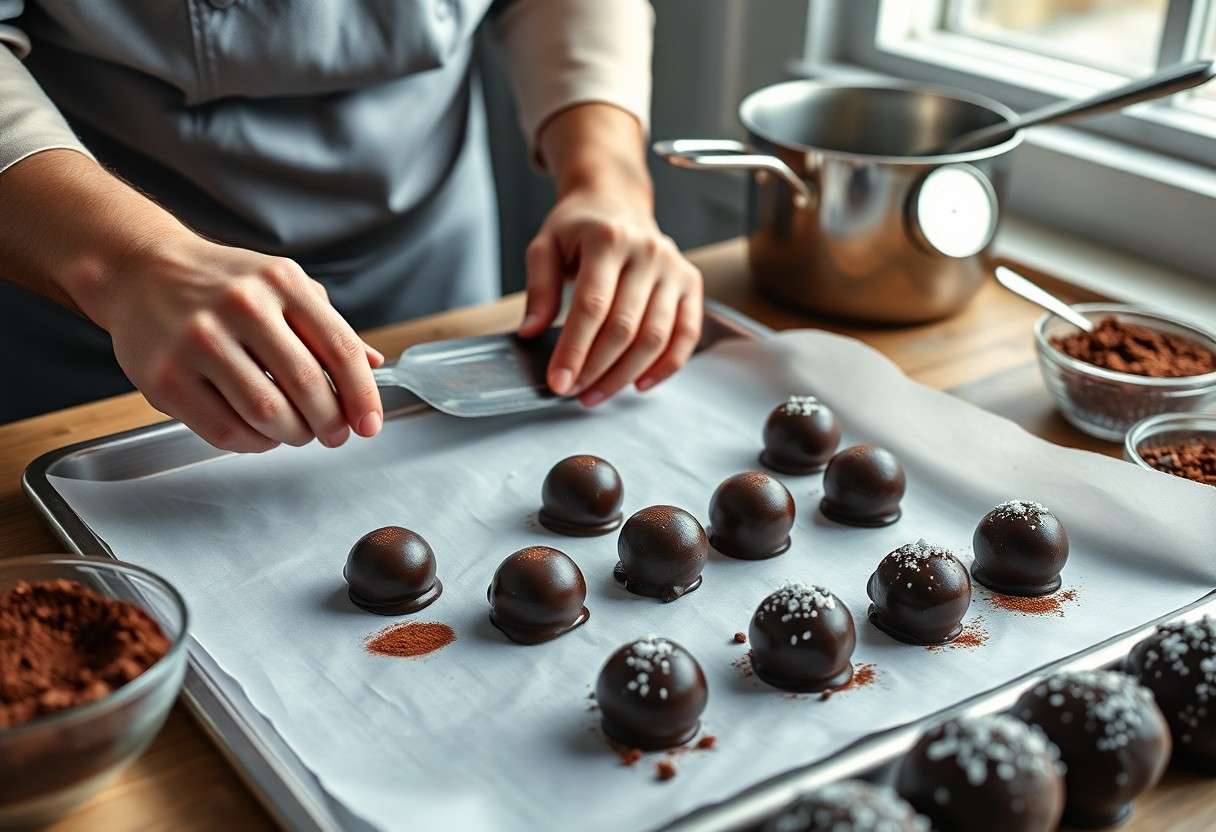
Experiment with coatings-powdered cocoa for bitter contrast, crushed nuts for crunch, or melted vegan chocolate for a glossy shell; cool hands and quick motions keep shells intact and tidy.
Avoiding a Sticky Situation
Heat will wreck plant-based ganache if you blast it; you want gentle warmth so cocoa solids and fats emulsify, and you should stop heating once the mixture is glossy to avoid a broken, oily mess.
Stick to dry tools and a steam-free workspace because even a drop of water will seize ganache, turning it grainy; if moisture sneaks in, strain and gently reheat with a splash of plant milk while whisking.
How to keep your cool (and your kitchen’s)
Cooler temperatures make rolling manageable, so chill the ganache briefly until firm but still scoopable; you’ll shape truffles faster and cleaner by working in short, focused batches.
Avoid handling ganache with warm hands; use a scooper, disposable gloves, and a bowl of cold water to cool utensils between rolls, keeping your kitchen tidy and truffles uniform.
Rescuing a ganache that has gone rogue
Sometimes ganache will separate or seize; you can rescue it by whisking in a small amount of warm plant milk or melted coconut oil while blending to re-emulsify, taking care not to overheat. You might also enjoy our guide on Best Vegan Chocolate Brands for Plant-Based Sweet Lovers.
If graininess persists, heat a teaspoon of plant cream and add it slowly while whisking, then strain through a fine sieve and chill briefly to restore smoothness. You might also enjoy our guide on Vegan Delights – Irresistible Cookie Recipes Everyone Will Love.
One pro trick you can try is an immersion blender: add a teaspoon of neutral oil or warm plant milk and pulse until smooth, keeping the ganache under 45°C to avoid further fat separation.
The Art of the Disappearing Act
You’ll notice guests approaching the platter like it’s a magic trick. Serve small, keep a hidden stash, and enjoy the applause as they’ll disappear within minutes.
Storing them so they actually last
Store truffles in an airtight container in the fridge for up to 10 days; freeze in single layers for up to 3 months if you want backups. Thaw in the fridge and avoid heat-melted centers lose their charm.
Serving suggestions for your adoring fans
Pair truffles with bold espresso or a fruity wine and sprinkle a pinch of sea salt to sharpen flavors. Garnish with crushed nuts or cocoa and clearly label any allergens so your adoring fans stay safe.
Offer bite-sized portions on a chilled plate, bring them to room temperature for peak creaminess, and add a crunchy or fruity element to keep every mouthful interesting.
To wrap up
As a reminder, you can make plant-based truffles at home with minimal fuss: melt vegan chocolate, stir in coconut cream or nut butter, chill until scoopable, roll into balls, and dust with cocoa or crushed nuts. You’ll wow guests, skip fancy equipment, and savor tiny bites that prove plant-based treats are dangerously easy.