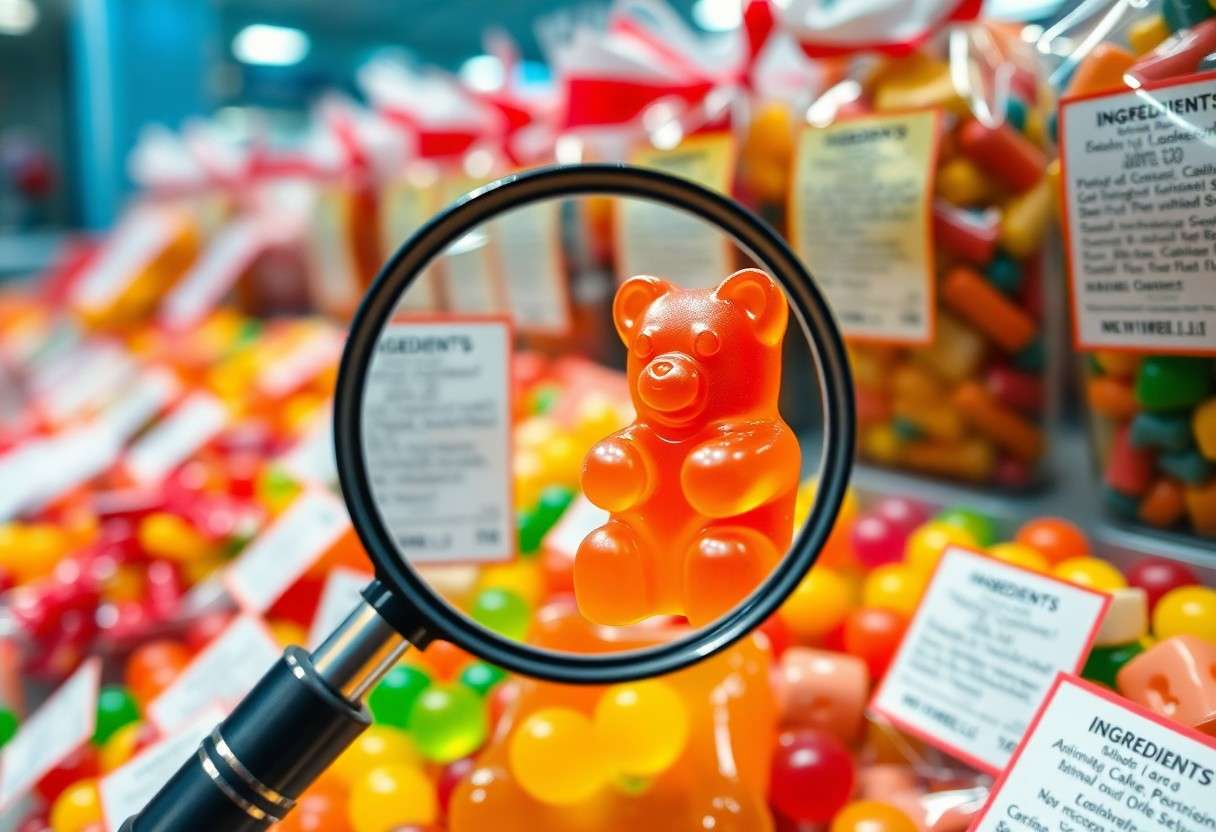
Essential Tips for Choosing Authentic Vegan Confectionery
There's real risk of hidden animal ingredients, so inspect labels and watch for hidden dairy or cross-contamination. You should prefer certified vegan products,

This article contains Amazon affiliate links. As an Amazon Associate, CandiesAndSweets earns from qualifying purchases.
 Save
Save
There’s real risk of hidden animal ingredients, so inspect labels and watch for hidden dairy or cross-contamination. You should prefer certified vegan products, verify ingredient sources, and contact manufacturers when doubts remain.
Identifying Hidden Animal-Derived Ingredients
Labels hide animal ingredients like gelatin, casein, whey, lactose, carmine (E120), beeswax, shellac and isinglass; you should scan ingredient lists for those names and common derivatives.
Checking packaging for a vegan certification or allergen statements helps, and recognizing E-numbers such as E441 will flag gelatin even when plain language is absent.
Common additives and food dyes to avoid
Watch out for carmine (E120), shellac (confectioner’s glaze), beeswax, sugar processed with bone char, L-cysteine, glycerin of unspecified origin, and vague “enzymes” or “natural color” listings.
Understanding cross-contamination vs. ingredient lists
If a product lists only plant-based ingredients but carries “may contain traces of milk” or “made on shared equipment” you should treat those warnings as potential cross-contamination rather than direct ingredients.
Assess your tolerance and ethics: if you avoid all animal contact seek products with certified vegan labels or explicit “produced in a vegan-only facility” statements to reduce risk.
Ask manufacturers when labels are unclear, check third-party vegan certifications, and prioritize brands that document ingredient sources and production practices to avoid hidden animal contact. You might also enjoy our guide on How to Make Plant-Based Truffles at Home Easily.
Verifying Official Vegan Certifications
Check packaging for recognized logos and verify them on certifier sites; when a claim lacks a visible seal you should treat it as unverified and potentially misleading.
The importance of the V-Label and Vegan Society trademark
Look for the V-Label or Vegan Society trademark since they indicate third-party auditing; you can trust products bearing them to have been checked for animal ingredients and cross-contamination controls.
Navigating regional vs. international standards
Assess certification origin: some marks are region-specific while others are globally recognized. You should check whether a logo follows international criteria or local rules that may be less strict.
Compare ingredient lists and certifier websites; you should watch for brands using local-language logo variants or self-declared vegan claims without third-party oversight, as these pose the highest risk of mislabeling.
Evaluating Sweeteners and Processing Methods
Check ingredient lists and certifications so you can identify whether sugars or additives were processed with animal products; when labels read simply “sugar” seek organic, unrefined, or certified vegan alternatives or specific mentions of beet sugar.
Inspect processing notes and reach out to manufacturers when in doubt, since some refiners use bone char to whiten cane sugar and that practice makes otherwise vegetarian-looking sweets non-vegan.
The role of bone char in sugar refining
Bone char comes from animal bones and is used by some refiners to bleach cane sugar, so you should avoid sugars filtered this way and favor products labeled unrefined or sourced from beet sugar, or clearly marked vegan.
Identifying plant-based alternatives to honey
Consider agave, maple, date syrup and rice malt for replacing honey in confectionery; you should test flavor and viscosity, since agave, maple, date syrup vary in sweetness and mouthfeel.
Try combining thicker syrups with a little water or apple butter to mimic honey’s texture, and always check for label transparency so you can ensure ingredients and processing match your vegan standards.
Distinguishing Texture and Binding Agents
Texture tells you which binders were used; press and warm a sample to check melt, snap and chew. You should watch for graininess from starches and a gelatin-like elasticity that signals non-vegan binders or mislabeling.
Check ingredient order and look for gums, starches, or alcohol-based stabilizers since small amounts alter mouthfeel. Pay attention to rubbery textures from overstabilization and crumbly results from underbinding when judging quality.
Replacing gelatin with agar-agar and pectin
Agar-agar gives a firmer, heat-stable gel that sets at room temperature, while pectin yields softer, jam-like gels and usually needs sugar plus acid. You must control doses carefully because agar can become brittle and pectin can fail to set without proper sugar/acid balance.
Assessing the quality of plant-based fats and emulsifiers
Evaluate fat melting point and emulsifier origin; cocoa butter and coconut oil provide clean melt and snap, whereas hydrogenated or partially hydrogenated oils contain trans fats you should avoid. Verify lecithin type and check whether mono- and diglycerides are plant-sourced.
Compare labels for % fat, processing method and additives since unrefined fats may add off-notes while refined fats keep a neutral profile. You should also match melting ranges to desired mouthfeel-lower melt for softness, higher melt for snap.
Assessing Ethical Sourcing and Sustainability
You should prioritize brands that publish ingredient origins and supplier audits, since transparency lets you avoid products linked to child labor or illegal land clearing. Seek companies that report on social and environmental impacts.
Check for independent certifications and public traceability systems; these reduce risk and let you compare claims. You can favor producers who fund farmer welfare and regenerative practices to limit deforestation and social harm.
Fair trade cocoa and conflict-free ingredients
Look for Fairtrade, Rainforest Alliance, or equivalent seals that indicate minimum social standards and premiums paid to farmers; these labels lower the chance of cocoa tied to abuse. You should verify what each label actually guarantees.
Ask brands for chain-of-custody documentation and conflict-free statements before buying; producers who share sourcing details make it easier for you to avoid chocolate with links to exploitation or illegal land conversion.
The impact of palm oil on vegan integrity
Understand that palm oil is plant-based yet its supply chain can drive deforestation, habitat loss and community displacement, which contradicts ethical vegan choices; you should check whether brands use RSPO or truly deforestation-free sources.
Consider avoiding products labeled only as “vegetable oil” and favoring brands that specify sustainably certified palm oil or use clear alternatives, so you do not inadvertently support environmental destruction. You might also enjoy our guide on The Complete Vegan Baking and Candy Guide.
Researching Brand Reputation and Transparency
Research brand websites and label photos so you can confirm the absence of animal-derived ingredients, clear allergen handling, and visible supply-chain transparency.
Check customer reviews and recall histories to help you spot reports of mislabeling or hidden dairy and honey in supposedly vegan sweets.
Evaluating artisanal vs. mass-produced confectionery
Artisanal makers often disclose sourcing and recipes openly, so you can assess cross-contamination risks and ingredient origins directly.
Mass-produced brands offer labels and certifications that you can verify, but you should watch for shared equipment that raises allergen and animal-ingredient contamination risks.
Utilizing third-party databases and vegan communities
Explore reputable databases and certification lists so you can cross-check brand claims against third-party certifications and audit reports.
Tap into active vegan forums and local groups so you can get real-time reports on reformulations and hidden animal ingredients that labels may miss.
Combine database checks with community feedback so you can build a reliable buy-or-avoid list and flag brands lacking transparency before purchase.
To wrap up
With these considerations you will assess labels, check ingredient sourcing, and prefer brands that certify vegan cross-contamination controls so your choices meet ethical and dietary standards. You might also enjoy our guide on Best Vegan Chocolate Brands for Plant-Based Sweet Lovers.
You should taste small batches, ask vendors about processing, and favor transparent makers to ensure authentic vegan confectionery that satisfies both flavor and ethics.