How Freeze Dried Candy Became the Hottest Snack Innovation
Candy transforms everyday sweets into airy, intense-flavor snacks, and you see how freeze drying scaled from labs to shelves; beware of choking risks for childr

This article contains Amazon affiliate links. As an Amazon Associate, CandiesAndSweets earns from qualifying purchases.
 Save
Save
Candy transforms everyday sweets into airy, intense-flavor snacks, and you see how freeze drying scaled from labs to shelves; beware of choking risks for children while enjoying longer shelf life and amplified taste.
The Science of Sublimation
Sublimation converts frozen water in candy directly into vapor under low pressure, so you avoid melting and preserve a porous, crunchy texture while concentrating flavors. The process keeps structure intact and retains volatile aromatics, giving freeze-dried candy its intense taste and light mouthfeel.
Understanding the Freeze-Drying Process
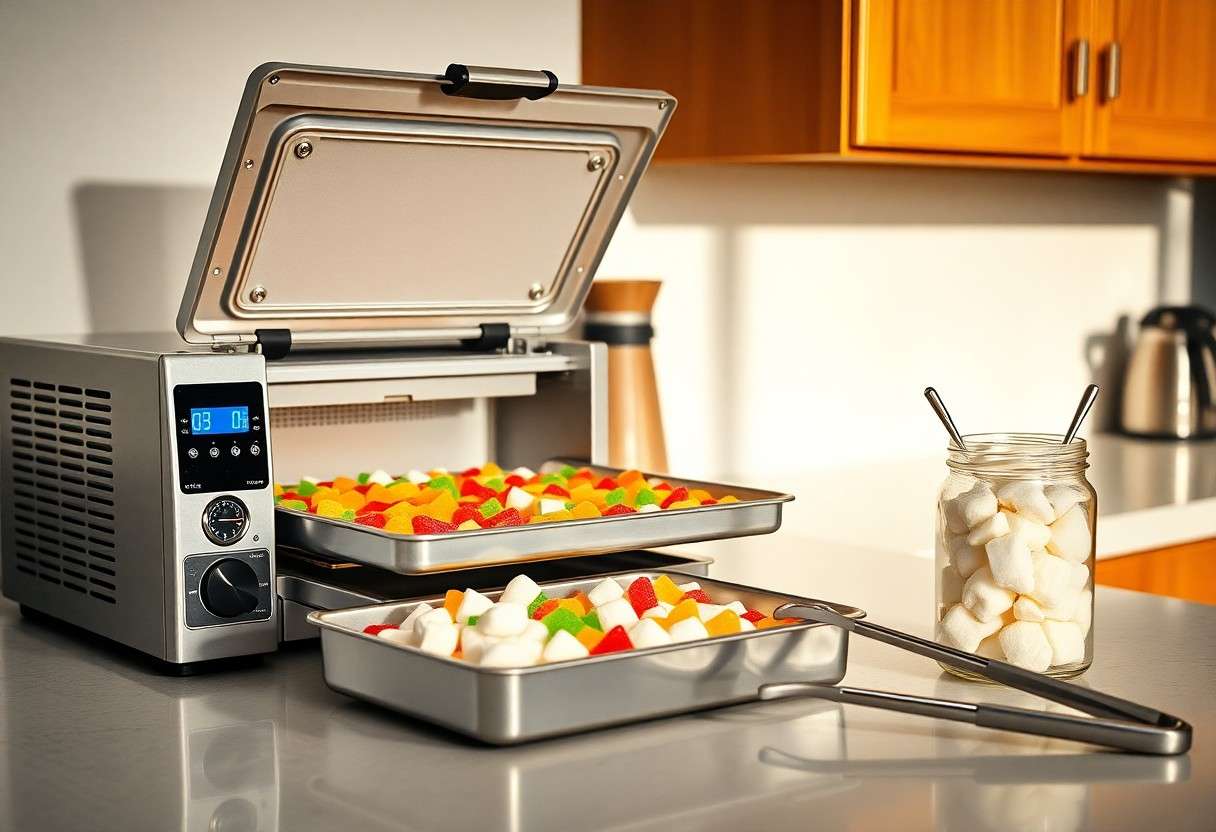
You first freeze the candy solid, then apply vacuum and gentle heat so ice sublimates; cells collapse into a dry matrix and moisture is removed without dissolving sugars. Operators monitor pressure and temperature to maintain consistency and avoid heat damage.
Preserving Flavor Integrity and Chemical Structure
Careful control lets you preserve molecular profiles by keeping temperatures low enough to limit Maillard reactions and oxidation, so chemical bonds in flavor compounds largely remain intact. That conservation sustains aroma intensity and mouthfeel compared with conventional drying.
Laboratory checks help you verify residual moisture below 2% and analyze volatiles; inadequate drying that leaves moisture creates a food-safety risk and can degrade delicate aromatics, so quality control matters.
The Social Media Catalyst
Social platforms turned a niche candy into a must-try sensation, as you watched creators showcase crisp, airy textures that were hard to ignore. Small-scale makers saw instant spikes in sales, while some posts warned that tiny fragments can pose a choking risk for young children.
The Impact of TikTok and ASMR Trends
TikTok clips and ASMR recordings amplified sensory appeal, making you zero in on the crackle and snap that defines freeze-dried candy. Rapid sharing created viral demand, and your feed made every bite feel like a live demonstration of texture and flavor.
Visual Aesthetics and the Viral Unboxing Experience
Colorful packaging and glossy close-ups made you stop scrolling, with saturated hues and tidy presentation signaling quality you wanted to try. Creators leaned on macro shots to turn unboxing into an event that drove massive engagement.
Crisp editing, layered sound design, and consistent branding helped you assign desirability to products, so a single well-shot unboxing could deliver overnight brand recognition while sparking questions about ingredient clarity and portion sizing.
Sensory Transformation of Classic Sweets
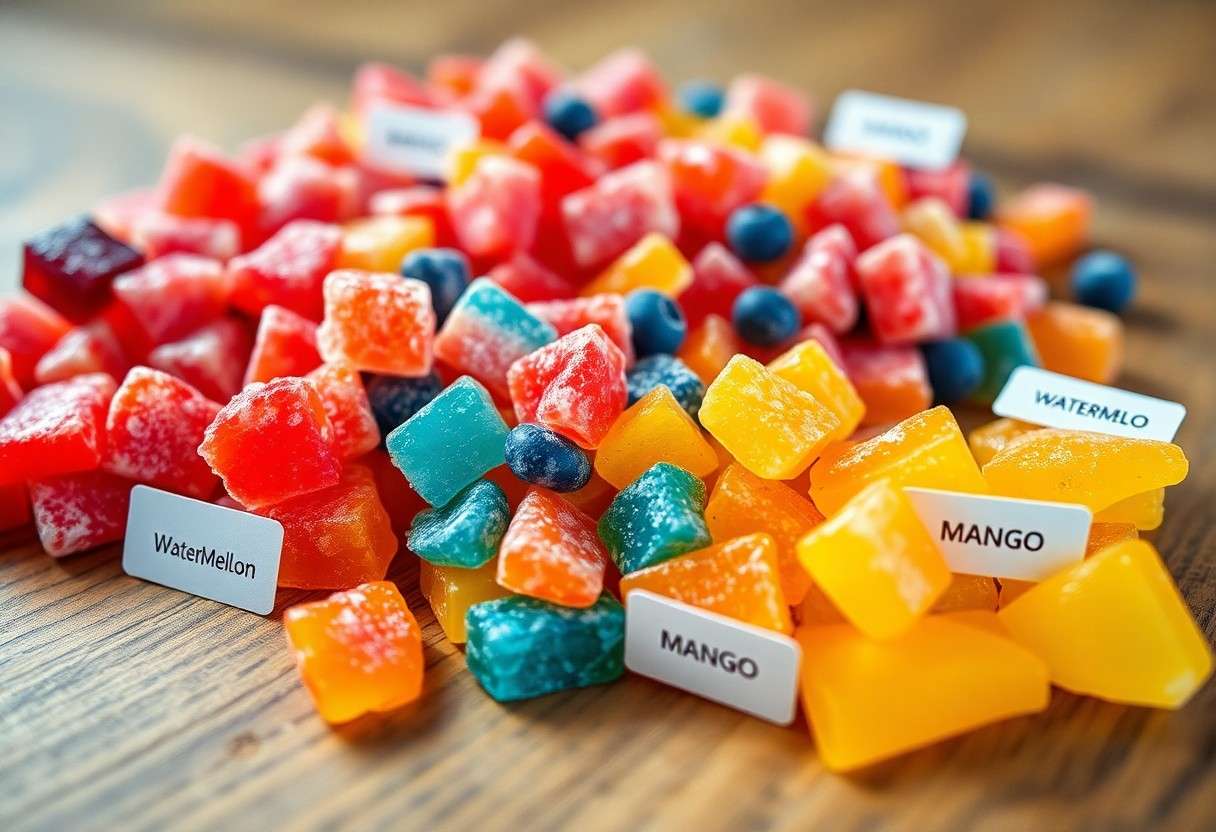
Texture shifts dramatically when you bite freeze-dried candy: water removal creates an airy, shattering crunch that makes familiar treats feel newly exciting.
Flavor concentrates as you chew, so sugars and acids hit faster and linger; you may notice an almost crystalline sweetness and powder residue that poses a choking risk if inhaled.
Engineering the Signature “Crunch”
Process freezes candies quickly and applies a vacuum to sublime ice, forming microvoids that collapse into the distinct, repeatable crunch you hear and feel.
Design choices like slice thickness and freezing rate let you tune brittleness; if over-dried, pieces can form sharp shards that feel unpleasant or cut soft tissues in the mouth.
Intensification of Sugar and Acid Profiles
Molecules concentrate during drying so you perceive sugars and acids more intensely, giving you explosive sweetness and punchy sour notes from the same candy mass.
Perception changes mean you might consume the same weight but absorb sugars faster, which can cause increased blood sugar spikes and stronger flavor fatigue than the original product.
Because manufacturers can coat citric crystals or reduce particle size, you can enjoy intensified flavor while lowering bite harshness; you should follow portion guidance and look for labels indicating reduced acid treatments if you are sensitive.
Market Disruption and Entrepreneurial Growth
Market shifts let niche freeze-dried brands displace shelf space and capture online attention, forcing incumbents to adapt while you profit from early-mover advantages. Investors fueled rapid category expansion, even as quality control and food-safety risks demand careful oversight.
The Rise of Small-Batch Boutique Producers
Artisans turned experimental batches into profitable microbrands, so you test flavors directly with followers and refine offerings between drops. That approach gives you direct consumer feedback, though scaling exposes supply and regulatory challenges.
Shifting Consumer Demands for Novelty Confections
You chase novelty and crave shareable moments, which pushes freeze-dried creators to deliver extreme textures and rotating collaborations; the result is fast-moving social trends that dictate production cycles.
Surveys show that you prioritize uniqueness and Instagram-ready presentation, increasing pressure for limited runs and creative packaging while exposing brands to brief trend cycles and inventory risk.
Technical and Operational Challenges
Production systems for freeze-dried candy demand precise vacuum and temperature control, and you must keep humidity tightly managed to protect texture. Staff errors or equipment faults raise contamination and batch-loss risks, so you enforce rigorous maintenance, calibration, and validation protocols to sustain consistent quality.
You will face long cycle times that limit throughput and force inventory buffering, increasing labor and storage costs. Effective automation can deliver higher margins, but you must weigh that against slower per-batch velocity and scheduling complexity.
High Capital Investment in Industrial Equipment
Heavy initial outlays for industrial freeze-dryers, vacuum pumps, and control systems mean you confront multi-hundred-thousand to million-dollar equipment costs before product revenue flows. Leasing, staged purchases, or co-packing partnerships can reduce exposure, yet you still need conservative ROI projections and contingency funding.
Specialized Packaging for Long-Term Shelf Stability
Modern packaging must block oxygen, moisture, and light to preserve crispness and flavor, so you specify high-barrier films and inert-gas flushing to extend shelf life. You also design tamper-evident seals and clear lot coding to protect brand trust during prolonged storage.
Precise oxygen and moisture testing becomes part of your QA, because minor leaks or subpar film specs can cause rapid quality degradation and costly recalls. Your shelf-life claims require accelerated aging data and strict traceability to satisfy retailers and regulators.
Barrier choices also affect fill-line speed and labeling, so you coordinate packaging engineers with production planners to avoid downtime; flexible pouches often offer the best trade-off between protection and throughput, while rigid formats can command a premium for retail display.
Future Outlook for Dehydrated Snacks
You should expect dehydrated snacks to expand beyond novelty as manufacturers emphasize longer shelf life and intensified flavor profiles that keep you returning for repeat purchases.
Expect pricing to fluctuate as ingredient shortages and rapid scale-up create supply chain strain, and watch transparent sourcing become a selling point you care about when choosing brands.
Expansion into Health-Conscious Fruit Alternatives
Brands are translating freeze-drying into fruit-forward snacks that let you choose chips with concentrated nutrients and no added sugars, making it easier for you to pick a health-smart treat.
Scalability and Mainstream Retail Integration
Manufacturers are upgrading equipment to achieve cost-effective production, so you find freeze-dried options at national chains instead of specialty shops; rapid scaling raises quality control risks that you should monitor on labels and batch codes.
Retailers will test pricing tiers and private-label lines to give you value choices while insisting on packaging that protects crunch and minimizes returns, with packaging integrity guiding shelf placement and replenishment.
To wrap up
You witnessed freeze-dried candy become a breakout snack by reimagining texture, concentrating flavor, and thriving on social sharing and influencer buzz. You gain new sensory experiences without added preservatives, and retailers respond to strong demand with product variety and clear labeling. You will likely see continued innovation as manufacturers refine processes and you, as a consumer, drive trends through purchases and online attention.