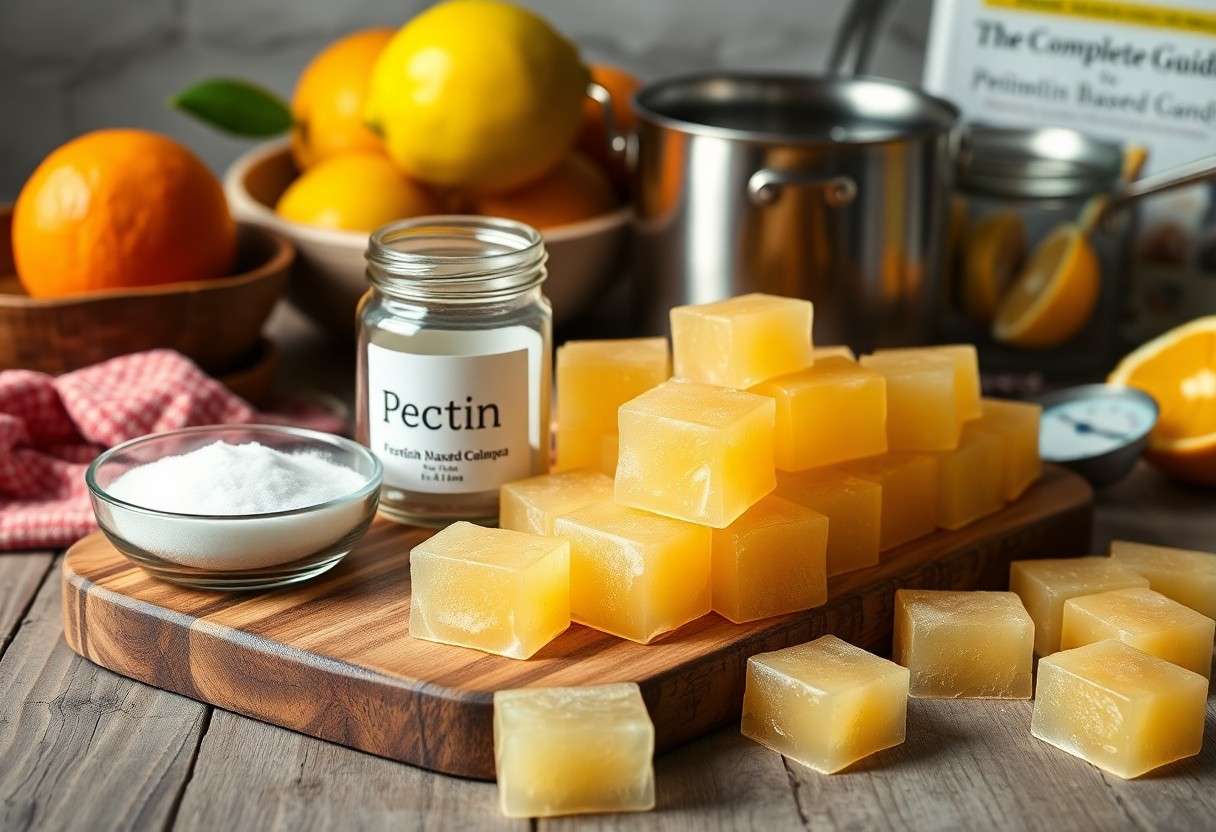
The Ultimate Guide to Gelatin Free Gummy Alternatives
Most of you want reliable gelatin-free gummy recipes; use agar-agar, pectin, or konjac for texture, avoid pork-derived gelatin for dietary and religious safety,

This article contains Amazon affiliate links. As an Amazon Associate, CandiesAndSweets earns from qualifying purchases.
 Save
Save
Most of you want reliable gelatin-free gummy recipes; use agar-agar, pectin, or konjac for texture, avoid pork-derived gelatin for dietary and religious safety, and check labels for hidden allergens and excess sugar to keep treats healthy and compliant.
Common Types of Plant-Based Gelling Agents
You can switch gelatin for agar-agar, carrageenan, pectin, starches, or konjac depending on the texture you want and the recipe’s sugar/acid balance; watch for digestive irritation concerns reported with some carrageenan preparations.
Each option differs by setting temperature, mouthfeel, and sensitivity to heat or acid, so you must match agent to application and dose carefully to avoid failed gels.
- agar-agar
- carrageenan
- pectin
- starches
- konjac
| Agar-agar | Firm, brittle gel; sets at room temp; vegan-friendly |
| Carrageenan | Elastic gels in dairy; controversial digestion concerns |
| Pectin | Fruit-based; needs sugar/acid or calcium; retains clean fruit flavor |
| Starches | Soft, chewy textures (tapioca, corn, potato); sensitive to prolonged heat |
| Konjac | Very elastic, strong gel; requires specific processing for safe use |
Agar-Agar and Seaweed-Derived Substitutes
Agar-agar comes from red algae and gives a firm, quick-setting gel that withstands higher temperatures than gelatin, so you can make room-temperature gummies that don’t melt in warm conditions.
Seaweed-derived options vary by strand and extraction; you should avoid overboiling agar because prolonged heat can cause reduced gelling, and you must test ratios to achieve the texture you want.
Fruit-Based Pectin and Vegetable Starches
Pectin relies on fruit acid and sugar for classic jelly textures, while low-methoxyl pectin gels with calcium for low-sugar applications, so you must adjust acidity and sweetener to get a reliable set.
Starches like tapioca, corn, and potato deliver soft, chewy gummies but can break down if heated too long and may become grainy if not cooked to clarity.
Perceiving which pectin type or starch best matches your recipe requires testing sugar, acid, and cooking time so you can dial in texture without overprocessing. You might also enjoy our guide on How to Make Dessert Sushi Rolls: Sweet Rice With Fruit.
Essential Factors for Selecting the Right Alternative
Consider how an alternative matches the functional profile of gelatin-free gummy alternatives: texture, firmness, clarity, thermal stability, and processing constraints such as pH and sugar. You should also weigh dietary labels like vegan and potential allergens, plus the risk of syneresis or microbial growth if setting is incomplete.
- Texture & mouthfeel: chew, elasticity
- Clarity & color: haze vs glass-like clarity
- Thermal stability & setting points: melt and set temps
- Dietary claims: vegan, kosher, allergen-free
- Processing: sugar, acid, refrigeration, shear
Perceiving these trade-offs lets you prioritize which gelling agents or blends meet your product goals while avoiding dangerous failures in texture or safety.
Evaluating Desired Texture, Firmness, and Clarity
Assess the target mouthfeel by testing small batches for chew, snap, and resilience; you should compare samples of pectin, agar, carrageenan, and starch blends to find the best match for firmness.
Look at clarity under light and after storage: starch often causes haze while some seaweed gels give glass-like clarity; you must watch for syneresis and adjust solids or cooling to maintain appearance.
Understanding Thermal Stability and Setting Points
Monitor the setting point and melt point for each candidate so you know whether your gummies will hold shape at ambient or warm temperatures; you should prefer agents with higher set temps if shelf heat is a concern.
Test heat cycling and storage at expected temperatures to confirm thermal stability, because insufficient set increases microbial risk and can ruin mouthfeel.
Balance ingredient ratios-for example, high-methoxyl pectin needs sugar and acid, while agar sets at higher temperatures and yields firmer, more heat-resistant gels; you should tweak concentration and processing to reach the target setting point without compromising clarity or safety.
Step-by-Step Guide to Crafting Vegan Gummies
| Step-by-Step Guide to Crafting Vegan Gummies | |
|---|---|
| Preparing the Base | Warm juice/tea with sweetener and acid; clarify for color and aroma. |
| Activating & Molding | Dissolve gelling agent at required temperature, pour into molds, chill to set. |
Preparing the Base Liquid and Flavor Infusion
Mix water or juice with sweetener and a little acid, warming gently to dissolve solids and coax out aromatics. You should aim for a clear, flavorful base and avoid prolonged boiling that strips delicate notes.
Choose fresh ingredients and taste-adjust before gelling; low-acid liquids often need added citric acid to help pectin or gellan perform and to keep flavors bright.
Activating the Gelling Agent and Molding
Heat the base with your chosen gelling agent, whisking until fully dissolved; follow manufacturer ratios and bring agar to a full boil while keeping pectin on a gentle simmer with acid.
Pour the hot mixture into molds promptly, tapping to remove air bubbles and chilling to set; handle hot syrup with care to avoid burns and ensure even texture.
Test a small piece after the recommended chill time and tweak texture by tiny adjustments-add more gelling agent for firmer chew or slightly more liquid for softness; store gummies airtight to maintain chew and prevent drying.
Expert Tips for Optimizing Gummy Consistency
Adjust ingredient ratios and temperature to refine chew and clarity; measure agar or pectin by weight and note that gelatin-free gummy bases set differently than gelatin. Keep hands and face away from hot syrup-burn risk.
Test small batches and document cooling, unmolding, and curing times to achieve repeatable texture, and control room humidity to avoid stickiness.
- Agar to water ratio
- Pectin plus acid balance
- Dehydration time and temperature
Balancing Acid Content for Better Gel Strength
Balance acid additions slowly while tasting and checking pH, since pectin-based gels need lower pH for strong set but overacidifying will weaken some bases. Use small increments and mix thoroughly before cooling.
Monitor final pH with strips or a meter and add acids at the end of cooking when the gelling agent is fully dissolved to minimize weakening of agar gels.
Best Practices for Storage and Dehydration
Store your gummies in airtight containers at cool, dry temperatures and separate layers with parchment to prevent sticking and mold growth. Check periodically for tackiness.
Control dehydration at low temperatures (40-60°C) in a dehydrator or oven, rotating trays and testing for a tacky exterior with a firm center to hit the ideal chew.
The final cure time of 24-72 hours at controlled humidity improves shelf life and texture, and you should consider vacuum-sealing or using desiccant packets to maintain consistent results. You might also enjoy our guide on Complete Functional Gummy Guide for Wellness Support.
To wrap up
With this in mind you can confidently choose between pectin, agar, carrageenan, and starch-based recipes to match texture and dietary needs. You will find DIY tips, flavor pairings, and shelf-life strategies in the guide so you can make gummies that suit vegan, halal, or allergen-sensitive diets. Test small batches to refine chew and sweetness until you achieve the desired result. You might also enjoy our guide on Essential Wellness Gummies for Immune System Support.